
BIGBEAR
PHARMACEUTICAL
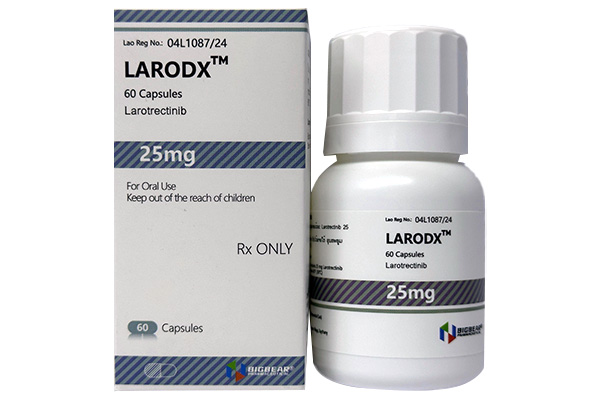

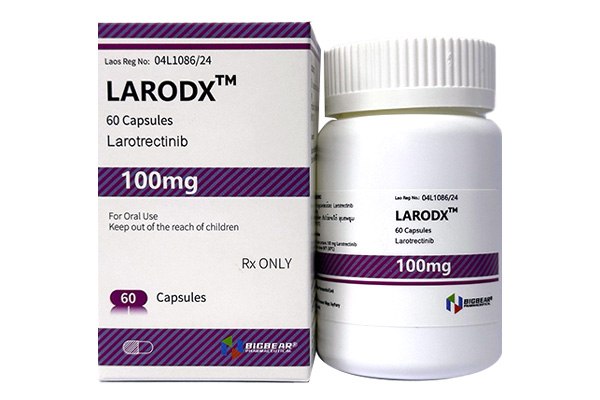
Larotrectinib is the world’s first highly selective neurotrophic tyrosine receptor kinase (TRK) inhibitor and a tissue-agnostic precision targeted antineoplastic agent.

 AuthenticGuaranteeFast DeliveryPrivacy
 Larotrectinib potently and specifically inhibits the kinase activities of TRKA, TRKB, and TRKC, blocks the aberrant proliferative and survival signaling pathways driven by NTRK fusion genes, and thereby precisely inhibits tumor cell growth and induces apoptosis.
Larotrectinib is indicated for adult and pediatric patients with solid tumors who meet the following criteria:
1、Diagnosed with neurotrophic tyrosine receptor kinase (NTRK) fusion gene without known acquired resistance mutations by a well-validated test;
2、Patients with locally advanced or metastatic disease, or for whom surgical resection is likely to result in severe complications;
3、Patients with no satisfactory alternative treatment or who have failed prior therapy.
Treatment with larotrectinib should be initiated by a physician experienced in anticancer therapy.
Prior to treatment with this product, the presence of NTRK fusion gene in the patient’s tumor sample must be confirmed.
A validated test method should be used to determine the patient’s NTRK fusion gene status.
Only patients with NTRK fusion gene confirmed by hospital or laboratory test results may receive this product.
The result should be verified by an independent third party designated by Bayer to confirm the presence of NTRK fusion gene before continuing treatment.
Adults
The recommended dose for adult patients is 100 mg larotrectinib twice daily, until disease progression or unacceptable toxicity occurs.
Pediatric Patients
Dosing for pediatric patients is based on body surface area (BSA).
The recommended dose for pediatric patients is 100 mg/m² larotrectinib twice daily, with a maximum dose of 100 mg per dose, until disease progression or unacceptable toxicity occurs.
If a dose is missed, a double dose should not be taken to make up for it.
The prescribed dose should be taken at the next scheduled time.
If the patient vomits after taking the dose, an additional dose should not be administered.
No dose adjustment is recommended for geriatric patients.
For patients with moderate (Child-Pugh B) to severe (Child-Pugh C) hepatic impairment, the initial dose of this product should be reduced by 50%. No dose adjustment is recommended for patients with mild (Child-Pugh A) hepatic impairment.
No dose adjustment is required for patients with renal impairment.
If concomitant administration with a strong CYP3A4 inhibitor is necessary, the dose of this product should be reduced by 50%. After discontinuation of the inhibitor for 3 to 5 elimination half-lives, the dose of this product taken prior to the administration of the CYP3A4 inhibitor should be resumed.
The most common adverse drug reactions (≥ 20%) of this product, listed in descending order of incidence, were:
elevated ALT (31%), elevated AST (29%), vomiting (29%), constipation (28%), fatigue (26%), nausea (25%), anaemia (24%), dizziness (23%) and myalgia (20%).
Most adverse reactions were Grade 1 or Grade 2.
Adverse reactions with the highest reported Grade of 4 included decreased neutrophil count (2%), elevated ALT (1%), elevated AST (< 1%), decreased white blood cell count (< 1%) and increased blood alkaline phosphatase (< 1%).
Adverse reactions with the highest reported Grade of 3 included anaemia, weight increase, fatigue, dizziness, paraesthesia, muscle weakness, nausea, myalgia, gait disturbance and vomiting.
All Grade 3 adverse reactions reported occurred in less than 5% of patients, except anaemia (7%).
Hypersensitivity to larotrectinib or to any of the excipients.
The clinical benefit of larotrectinib sulfate was established in a single‑arm trial with a relatively small sample size of tumor patients harboring NTRK fusion genes.
Larotrectinib sulfate demonstrated a favorable effect based on the overall response rate and duration of response in a limited number of tumor types.
The efficacy of this product may vary depending on tumor type and accompanying genetic alterations.
For the above reasons, treatment with larotrectinib sulfate should only be initiated when treatment options with established clinical benefit are lacking or have been exhausted (i.e., no satisfactory treatment options are available).
Neurological reactions including dizziness, gait disturbance, and paraesthesia have been reported in patients taking larotrectinib sulfate.
Most neurological reactions occurred within the first 3 months of treatment.
Discontinuation, dose reduction, or interruption of dosing should be determined based on the severity and persistence of these symptoms.
Elevations in ALT and AST have been reported in patients taking larotrectinib sulfate.
Increases in ALT and AST occurred predominantly during the first 3 months of treatment.
Liver function (including assessment of ALT and AST) should be monitored prior to the first dose and monthly for the first 3 months of treatment, then periodically during treatment, with more frequent testing in patients with transaminase elevations.
This product should be interrupted or permanently discontinued based on severity.
If interrupted, dosing should be resumed at a modified dose upon recovery.
Concomitant administration of strong or moderate CYP3A4/P‑gp inducers with this product should be avoided due to the risk of decreased exposure.
Women of childbearing potential must use highly effective contraception during treatment with this product and for at least 1 month after stopping treatment.
Men of childbearing potential with female partners of childbearing potential who are not pregnant should be advised to use highly effective contraception during treatment with this product and for at least 1 month after the last dose.
Larotrectinib sulfate has a moderate effect on the ability to drive and use machines.
Dizziness and fatigue have been reported in patients receiving this product, most of which were Grade 1 and Grade 2 within the first 3 months of treatment.
These may affect the ability to drive and use machines during this period.
Patients should be advised not to drive or use machines until they are reasonably certain that treatment with this product will not adversely affect them.
For more detailed drug information, please consult the official package leaflet.
If any issues arise, please contact us immediately.
Email:laosbigbear@gmail.com

Copyright2024@ BIGBEAR All right reserved Bigbear | Bigbear Pharmaceutical | Bigbear Laos


